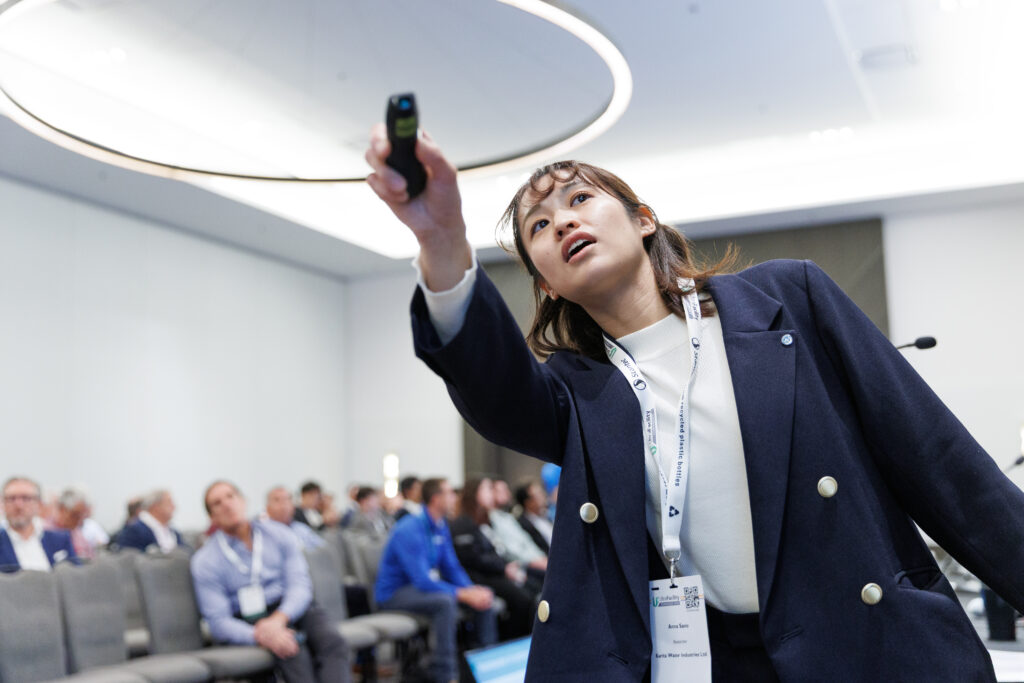
50 presentations are selected from 100+ submissions by our independent technical advisory committee. Only data-driven, results-focused work makes the agenda – no vendor pitches, no filler.
It’s your chance to present to the 850+ semiconductor facilities professionals attending, including engineers from Intel, Samsung, TSMC, Micron, and GlobalFoundries.
Until submissions close
DEADLINE: 04/24/2026
Submission Guidelines and Information
Critical Focus Areas
UltraFacility 2026 brings every critical facility system into focus: UPW, chemicals, wastewater, HVAC, abatement, power, and construction. Each plays a defining role. Together, they enable the pace which the AI era demands from semiconductor facilities.
Click to expand into each priority area and examine the technical challenges influencing next-generation facility strategy.

Topic areas include:
Next-generation of high purity critical systems
Next generation ultrapure water systems
Next generation chemical systems
Next generation of high purity materials
High purity specification gases
Emerging purity requirements in advanced nodes (e.g., GAA packaging sensitivity)
Advanced metrology and contamination control
Advanced analytical technology for UPW, high purity chemicals, AMC and high purity gases
Understanding particle and particle precusors in ultrapure water and high purity chemicals, including pathways
Contamination control from chemical supplier perspective
Inline automation and AI for yield enhancement
Correlating yield with facility performance via big data. Contamination control – where does it have impact on cleanroom yield and reliability?
AI-driven maintenance of high purity systems
CFD modelling
Yield meets circularity
UPW recycling research – risk and implementation, including monitoring for recalcitrants
High purity chemical reclaim – IPA, sulfuric acid, phosphoric acid, TMAH

Topic areas include:
Decision-making complexity for sustainability
Trade-offs between water reuse, ZLD, cost, and energy-intensity
Different sustainability goals, safety, and aging infrastructure
Understanding baseline water and infrastructure requirements – including for advanced packaging facilities
Responses to emerging contaminants - including alternative chemicals, PFAS destruction, and regulatory updates
Status reports on removing PFAS from systems in the semiconductor industry
Process to innovate chemicals from both technical and regulatory perspective.
Innovation in wastewater treatment and instrumentation, including advances in chemicals.
Biological systems – operational considerations and innovations, including emergency preparedness and recovery time, and including small scale for niche waste streams
Includes ammonia, organics, heavy metals, ionic heavy metals, hydrogen peroxide, PFAS, fluoride. HF waste reclaim
Energy, chemical, and water consumption reduction
Reduction of evaporative cooling demand
Energy reduction for UPW systems/water-energy nexus
Energy reduction for HVAC systems, including free cooling, heat recovery
AI for improving energy efficiency
Water-energy nexus in data centers, including different cooling types and trade-offs
Energy recovery
Solvent recovery
Abatement, air, and exhaust control
Control on strict exhaust requirements
CFD modelling
Advanced gas abatement technology
Power and electrical energy
Renewable energy integration
On-site power generation
Nuclear and SMRs
Electrical infrastructure power and reliability
Data center-semiconductor knowledge exchange
Direct-to-chip cooling system design
Reducing equipment and operations redundancy
Adiabatic cooling analysis and operational challenges

Topic areas include:
Digital Transformation and AI for construction and operations
Integration of humanoid robots/all robotics, including for cleanroom and non cleanroom use.
6D/7D BIM
AI for predictive maintenance
Construction productivity
Offsite manufacturing and offsite commissioning
Tools to manage supply chain challenges, material shortages, procurement
Best practices for pre-commissioning steps and timeline in construction
Tools for managing expertise shortage
AR for training
Automation and robotics
Lessons learned from new factories recently brought online
Impact of value engineering
Engineering Project Management
Business continuity plans and training / communication on project start and execution
Guidelines
Our audience are engineers working in the semiconductor and other high-tech industries. They are seeking specific solutions that directly address industry pain points and need data to prove the value of the solution.
These guidelines have been created to ensure that our team can best assess the value of your submission research and give you the greatest chance to present.
Please note that all submissions and reviewer feedback are managed through the ExOrdo platform. You will need to log in or create an account to access the system.
Your abstract must:
- Demonstrate progress in solving critical industry issues.
- Be data-driven, with context about the technical details and the stage of your work.
- Tell a story with data, focusing on the lessons that the audience can take away.
- Not sell a particular tool or proprietary technology, using generic technology names.
- Use data that does not serve the primary purpose of showcasing the benefit of one proprietary technology over another.
Notes:
- Your presentation will be approximately 20 minutes in length, with 5 minutes additional for Q&A.
- If your abstract is not selected for a presentation, we will use the information provided to consider your topic for a roundtable or other opportunities.
- Submitting an abstract does not guarantee any speaking position.
Trouble submitting your abstract? Our support team is on hand to help – Contact the UltraFacility Support Team here.
2026 Timeline
The UltraFacility submissions process adheres to a strict timeline. Please ensure that you take note of these key deadlines, and highlight any problems to our team in advance.
April 24
Abstract Submission Deadline
June 2
Abstract Review Decision
10 July
Preliminary Presentation Deadline
August 28
Final Presentation Submission
September 16 - 18
UltraFacility 2026 Conference
- Abstract submission Deadline [04/24/2026]
Abstracts are open. - Abstract Review Decision [06/02/2026]
We will inform you of the decision of the review process. Please note, the organiser still reserves the right to remove presentations after this stage if they fail to meet our standards. - Preliminary Presentation Deadline [07/10/2026]
Your preliminary draft must be submitted by this date. The UltraFacility team will aim to review and provide feedback by July 10th. - Final Presentation Submission [08/28/2026]
Your final presentation must be submitted by this date. The UltraFacility team may provide further comments. Should you plan on attending the conference, you will also receive speaker-specific logistical information at this point. - UltraFacility 2026 Conference [09/16/2026]
Our three-day agenda starts on Wednesday, September 16th. Join us in Phoenix, Arizona, and present your abstract to an audience of 850+ professionals.
Who Should Submit?
UltraFacility invites submissions shaping the infrastructure of advanced semiconductor and AI-driven facilities, including:
- Semiconductor facility and technology development teams
- High-purity chemical and materials specialists
- Thermal and HVAC OEMs
- Power, electrical, and microgrid experts
- Water and wastewater innovation leaders
- Data center facilities engineers
- Digital and AI-driven operations teams
- Start-ups
- Students and academics – poster option available
This is your opportunity to present your work to an audience of 850+ facility experts from leading companies around the world.